
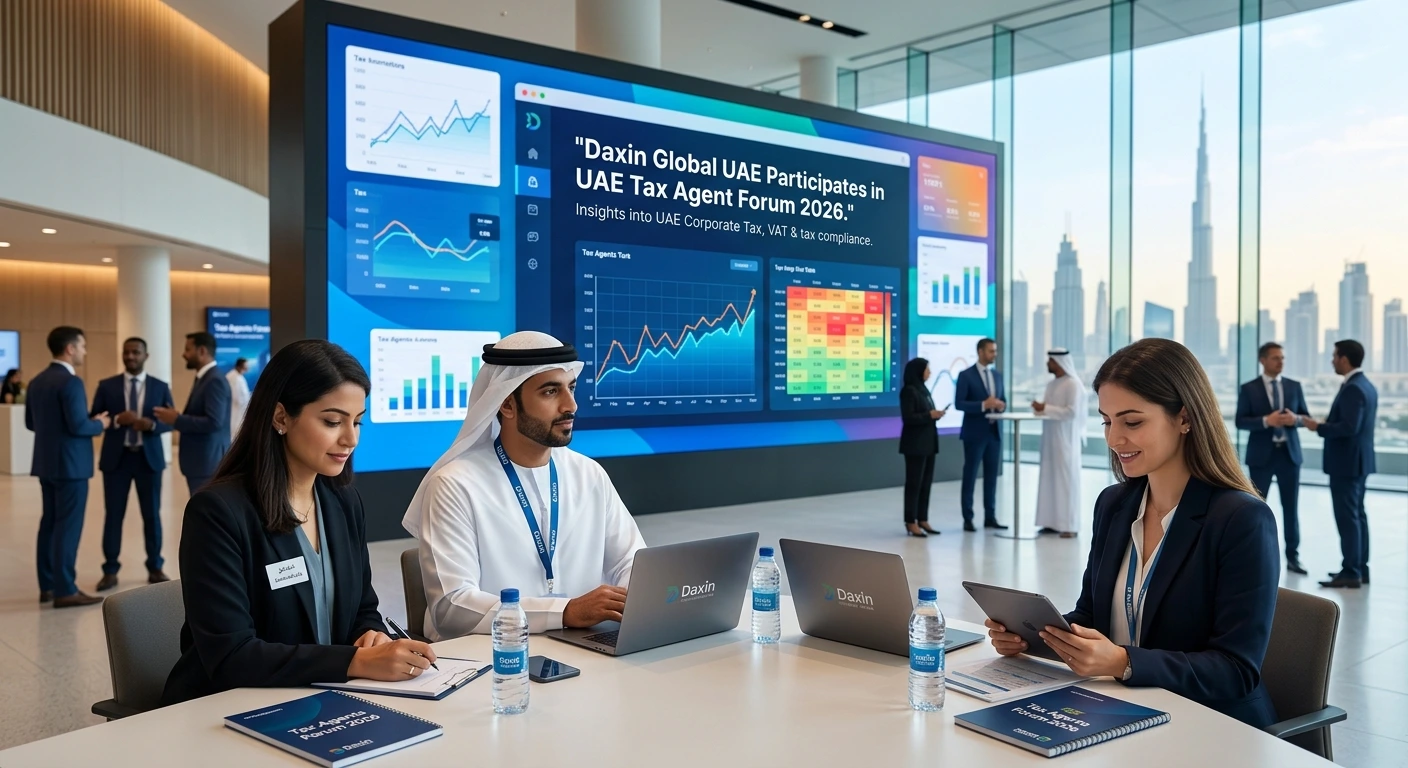
The Tax Agents Forum 2026, hosted by the UAE Federal Tax Authority (FTA) in Dubai, UAE, brought together tax agents, tax advisors, industry professionals, and key stakeholders to discuss important developments shaping the UAE tax and regulatory landscape.
The forum was officially opened by H.E. Abdulaziz Mohammed Al Mulla, Director General of the FTA, highlighting the importance of continued collaboration between the Authority and tax professionals in supporting an efficient, transparent, and compliant tax environment.
The forum provided an important platform for knowledge sharing and professional engagement on the UAE’s evolving taxation framework. Discussions covered a broad range of areas relevant to tax agents, practitioners, and businesses, including UAE Corporate Tax, Value Added Tax (VAT), Excise Tax, tax compliance, regulatory requirements, professional standards, and developments in tax administration.
As the UAE tax framework continues to evolve, businesses and tax professionals need to stay informed about regulatory requirements and compliance responsibilities. Forums of this nature provide tax agents with opportunities to strengthen their technical knowledge, exchange practical insights, and remain informed about developments affecting businesses across the UAE.
A Comprehensive Agenda for UAE Tax Professionals
The Tax Agents Forum 2026 addressed several areas that are increasingly important within the UAE tax environment. The agenda covered Tax Agent Continuing Professional Development (CPD), Corporate Tax developments, Qualifying Free Zone Persons and Transfer Pricing, Pillar Two, VAT and Excise Tax, e-invoicing, and Tax Procedures.
Together, these sessions provided tax agents and practitioners with a comprehensive view of current and emerging tax matters and their potential implications for businesses.
The emphasis on CPD also reinforced the importance of maintaining up-to-date technical knowledge as UAE tax legislation and administrative practices develop. With businesses increasingly dealing with Corporate Tax, VAT, Transfer Pricing and new digital compliance requirements, professional knowledge must continue to evolve alongside the regulatory framework.
Discussions around e-invoicing and digital tax processes were particularly relevant as tax administration in the UAE continues to become more technology-driven. Businesses should therefore consider not only whether they are technically compliant today, but also whether their accounting systems, documentation processes and internal controls are prepared for upcoming changes.
Key Takeaways from the UAE Tax Agent Forum 2026
The forum reinforced the importance of continuous professional development, regulatory awareness, and proactive tax compliance. It also highlighted the valuable role of tax agents in helping businesses understand their tax obligations and maintain accurate and timely compliance.
Several developments discussed at the forum are particularly relevant for SMEs and growing businesses across the UAE.
One significant point was the extension of Small Business Relief to tax periods ending on or before 31 December 2029. For eligible businesses, this makes it particularly important to understand the applicable conditions and assess how the relief may fit within their Corporate Tax position.
Another important development is the new R&D Tax Credit, providing a potential credit of up to 50% on qualifying research and development expenditure for tax periods beginning from 1 January 2026. Businesses undertaking eligible innovation or R&D activities should consider reviewing their expenditure, supporting records and accounting processes to determine how the relevant requirements may apply.
The forum also highlighted a new election relating to tax depreciation on Investment Properties. This is an area where businesses holding investment property should carefully assess the available treatment and its potential tax implications before making relevant elections.
Transfer Pricing remains another important consideration. The rules are not solely a concern for large multinational groups; SMEs entering into transactions with related parties or connected persons also need to consider applicable requirements. Maintaining appropriate arm’s length pricing, supporting documentation and accurate records can therefore be an important part of Corporate Tax compliance for businesses of different sizes.
For businesses operating within UAE free zones, maintaining Qualifying Free Zone Person (QFZP) status also requires careful attention. The forum highlighted the importance of satisfying six specific conditions associated with QFZP status. Businesses seeking to benefit from the applicable Corporate Tax treatment should regularly review their activities, transactions, substance and compliance position rather than assuming that operating from a free zone automatically provides qualifying status.
These points are particularly relevant for UAE businesses operating in free zones, holding investment properties, undertaking R&D activities, or conducting transactions with related parties. Reviewing the potential implications with a tax advisor before relevant year-end decisions and elections are finalised can help identify compliance issues early and support more informed tax planning.
Strengthening Tax Compliance Through Professional Engagement
Ongoing cooperation between the FTA and UAE tax professionals remains important as the country’s tax environment develops. Direct engagement through forums such as the Tax Agents Forum allows practitioners to better understand regulatory developments while also strengthening communication between tax professionals and the Authority.
Staying informed about Corporate Tax and VAT requirements, Transfer Pricing, Free Zone taxation, administrative procedures, compliance standards, e-invoicing and digital tax processes enables tax professionals to provide effective and reliable support to businesses.
For companies, this reinforces an equally important point: tax compliance should increasingly be viewed as an ongoing business process rather than a year-end exercise. Changes affecting reliefs, elections, related-party transactions, free zone status and digital reporting can have practical implications for accounting records, internal processes and business decisions throughout the financial year.
Daxin Global UAE’s Participation
Daxin Global UAE was pleased to attend and participate in the Tax Agents Forum 2026 hosted by the UAE Federal Tax Authority in Dubai. The event provided an excellent opportunity to engage with fellow tax professionals, exchange industry perspectives, and gain valuable insights into developments within the UAE tax landscape.
The breadth of the forum—from Corporate Tax and Transfer Pricing to QFZP requirements, Pillar Two, VAT, Excise Tax, e-invoicing and Tax Procedures—provided valuable perspectives on both current compliance priorities and the direction of the UAE’s tax environment.
At Daxin Global UAE, continuous professional development and regulatory awareness form an important part of our commitment to delivering reliable professional services. Participation in industry forums helps us remain informed about relevant developments and strengthens our ability to support businesses navigating UAE tax and compliance requirements.
Through our UAE Corporate Tax, VAT, tax advisory, accounting, compliance, and business advisory services, we support organisations in understanding their responsibilities and meeting their regulatory obligations with confidence.
Our participation in the UAE Tax Agents Forum 2026 further reflects Daxin Global UAE’s commitment to professional excellence, regulatory compliance, continuous learning, and trusted client service across the UAE.
FAQ:
The UAE Tax Agent Forum 2026 is a professional forum hosted by the UAE Federal Tax Authority (FTA) in Dubai. It brings together tax agents, advisors, practitioners, and other stakeholders to discuss developments in the UAE tax landscape, including Corporate Tax, VAT, Transfer Pricing, Free Zone taxation, e-invoicing, and tax procedures.
The forum covered several important areas, including Tax Agent Continuing Professional Development (CPD), UAE Corporate Tax developments, Qualifying Free Zone Persons (QFZP), Transfer Pricing, Pillar Two, VAT and Excise Tax, e-invoicing, and Tax Procedures. These topics are increasingly relevant to businesses as the UAE tax and regulatory framework continues to develop.
The developments discussed at the forum can have direct implications for SMEs, particularly in areas such as Small Business Relief, R&D expenditure, investment properties, related-party transactions, and Corporate Tax compliance. SMEs should regularly review their tax position to understand which rules, reliefs, elections, and documentation requirements may apply to their business.
Yes. UAE Transfer Pricing rules can apply to SMEs where they enter into transactions or arrangements with related parties or connected persons. Businesses should ensure relevant transactions follow the arm’s length principle and maintain the records and documentation required under applicable UAE Corporate Tax regulations.
Free Zone businesses should determine whether they meet the requirements for Qualifying Free Zone Person (QFZP) status and continue to satisfy the applicable conditions. This includes reviewing qualifying activities and income, transactions with related parties, Transfer Pricing requirements, substance, documentation, and other relevant compliance obligations. Regular reviews with a UAE tax advisor can help businesses identify potential issues before important tax deadlines or elections.